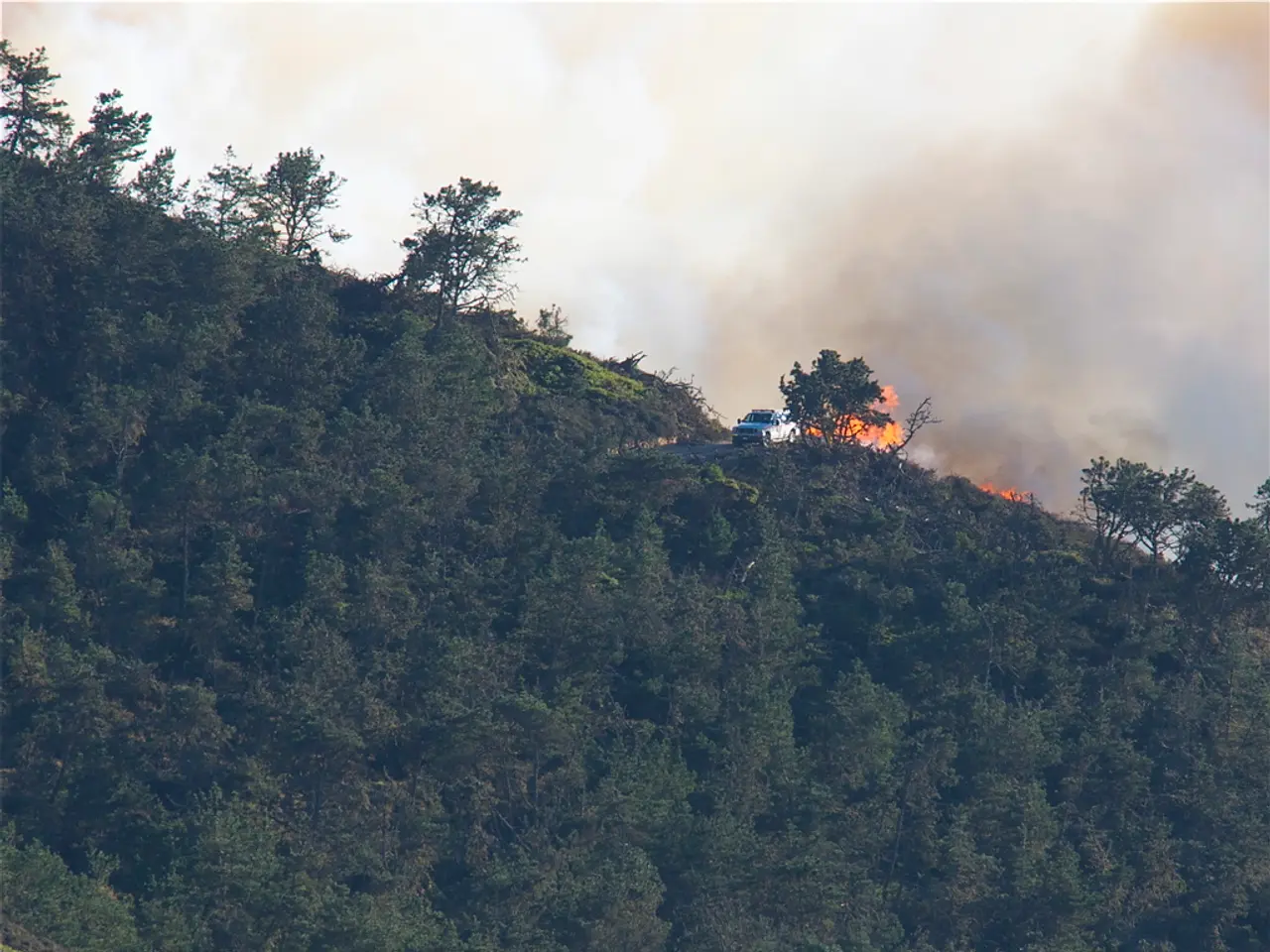
Volcanic activity explodes from a massive rift in Iceland after series of earthquakes - and the images are awe-inspiring
The ongoing volcanic eruption on Iceland's Reykjanes Peninsula has raised concerns about its environmental and public health impacts, primarily due to sulfur dioxide (SO2) emissions and volcanic glass fibers known as "witches' hairs."
Environmental and Public Health Impacts:
1. Sulfur Dioxide Emissions: - The eruption has released substantial amounts of sulfur dioxide gas into the atmosphere, causing elevated levels of air pollution in nearby areas such as Reykjanesbær and Vogar. - The gas poses risks to respiratory health, especially for vulnerable populations, and authorities have urged residents and travelers to monitor air quality closely.
2. "Witches' Hairs" (Volcanic Glass Fibers): - Fine volcanic glass fibers, known as "witches' hairs," can be dispersed by the eruption, potentially causing respiratory irritation if inhaled. - The Icelandic Met Office (IMO) has reported the formation of "witches' hairs" due to the rapid cooling of lava.
3. Community Impact and Safety Measures: - About 100 residents were evacuated from the town of Grindavík, and the nearby Blue Lagoon geothermal spa was closed to avoid exposure to lava flows and toxic gases. - Although the lava flow currently does not threaten major infrastructure, gas pollution remains a significant localized hazard.
4. Localized but Significant Effects: - The eruption is described as highly localized with no major impact on wider Icelandic infrastructure or air traffic, but the localized air pollution from sulfur dioxide and related gases demands continuous monitoring.
The Icelandic Civil Protection Department has shared aerial photos of the eruption on Facebook, and the current activity is close in proximity to where magma flows occurred during previous eruptions. The area where the current eruption is occurring is well known for volcanic activity and has seen a string of similar eruptions in recent years.
It is important to note that the ongoing eruption is preceded by an "intense earthquake" swarm and that the main fissure is approximately 1.5 miles (2.4 kilometers) long, with a secondary fissure identified, approximately 1,600 feet (500 m) long.
People are urged to be careful outdoors near the eruption sites due to "witches' hairs," and to stay informed about air quality and follow governmental safety instructions.
[1] Iceland Met Office (IMO) statement regarding the eruption. [2] Reykjanesbær Municipality air quality updates. [3] Icelandic Civil Protection Department updates and advisories. [4] World Health Organization guidelines on volcanic ash and air quality.
- Space and Astronomy: The unique vantage point of the ongoing volcanic eruption in Iceland offers a valuable opportunity for researchers in environmental science, providing valuable insights into the behavior and impacts of volcanic activity, which can help us better understand similar phenomena in other parts of the solar system.
- Health-and-Wellness: Given the potential risks posed by sulfur dioxide gas and "witches' hairs," it is advisable for individuals with respiratory issues or who are pregnant or nursing to carefully weigh the potential health risks against any planned outdoor activities near the volcanic eruption sites in Iceland.