Medical Professionals in Gdańsk Successfully Excise 14-Kilogram Renal Growth
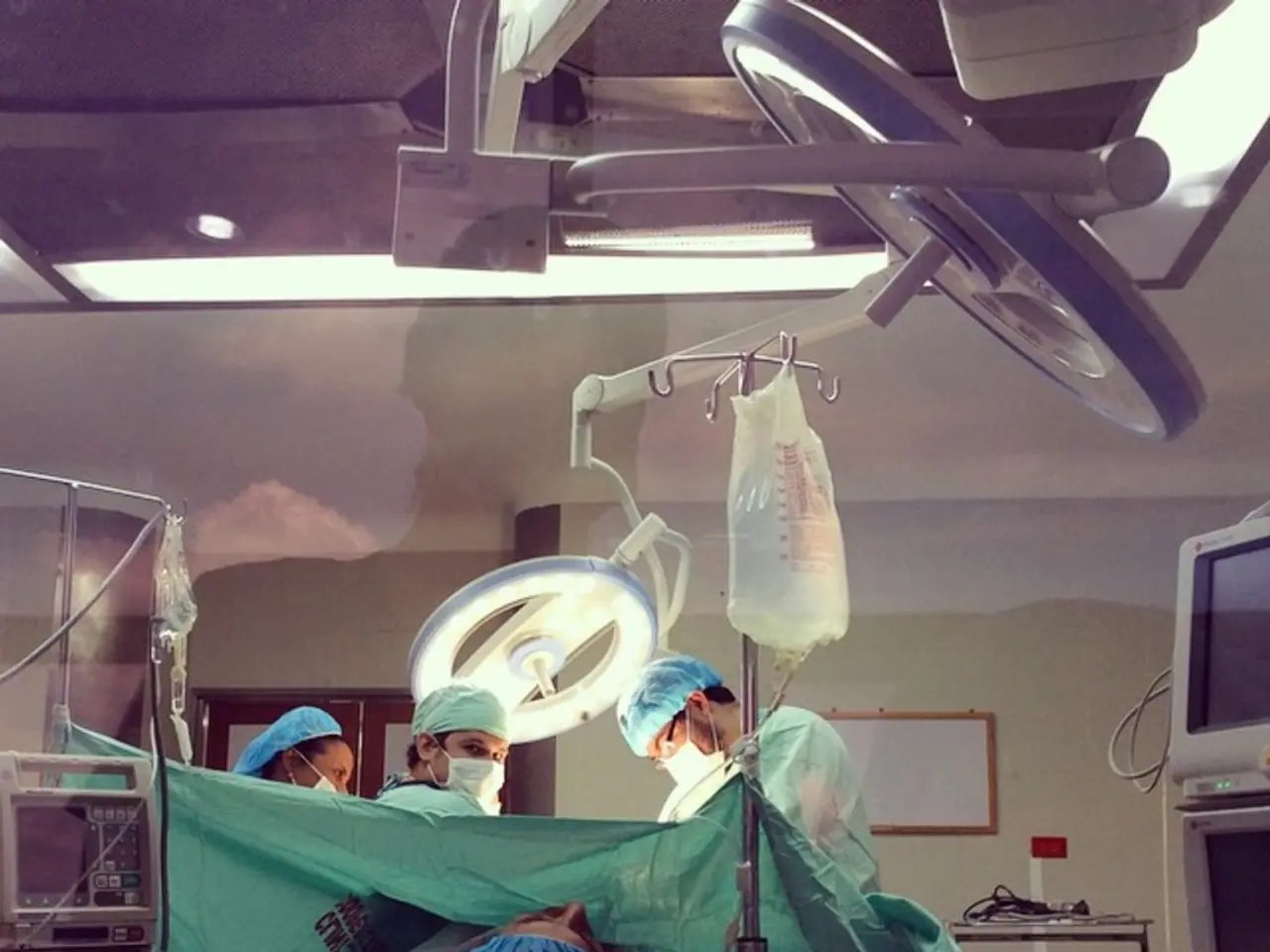
In a remarkable medical feat, a 14-kilogram kidney tumor was successfully removed from a 66-year-old patient at St. Adalbert Hospital in Gdansk, Poland. The operation, one of the most challenging in recent years, required meticulous planning and a highly skilled surgical team.
The patient's persistent abdominal discomfort and increasing fatigue led to the discovery of the tumor during routine medical examinations. The operation, while complex, was necessary as leaving the tumor untreated was not an option due to the patient's deteriorating condition.
Removing large kidney tumors, such as the one treated at St. Adalbert Hospital, presents several significant risks and challenges. Surgical complexity and risks increase with larger tumors, and procedures like radical nephrectomy (full kidney removal) or partial nephrectomy (tumor removal while sparing kidney tissue) can lead to complications such as infections, bleeding, allergic reactions to anesthesia, damage to surrounding organs, and kidney failure.
For large tumors, partial nephrectomy carries a higher rate of complications compared to radical nephrectomy, including urine leakage, longer operation times, and increased postoperative complications. Balancing oncological control and kidney function is a delicate process, as radical nephrectomy may result in complete loss of the affected kidney, potentially impacting renal function, while partial nephrectomy aims to preserve kidney function but may carry a risk of cancer recurrence and higher morbidity.
The surgery also increases the risk of inadvertent injury to adjacent organs or important tissues during surgery. Postoperative challenges, such as managing complications like urine leakage and infection, require careful postoperative care, which can be prolonged and complex.
If the tumor is not fully removed or managed adequately, risks include uncontrolled hypertension, kidney failure, metastasis to vital organs, and bone marrow suppression.
The patient is currently recovering from the surgery, and the medical team at St. Adalbert Hospital remains optimistic about his return to normal life. Specialists are studying the removed tumor to gain further insights into its nature and potential implications for future treatment strategies.
This case serves as a reminder of the importance of preventive healthcare in detecting serious conditions early. Regular medical screenings for older adults, particularly those with persistent symptoms, can lead to early detection and treatment, potentially saving lives.
Poland 24, an independent publication dedicated to providing accurate, insightful, and timely news from Poland, encourages readers to sign up for a weekly recap of news from Poland. Your support helps sustain the quality of their reporting and allows them to cover a wider range of topics.
[1] American Cancer Society. (2021). Kidney cancer - treatment - surgery. Retrieved from https://www.cancer.org/cancer/kidney-cancer/treating/surgery.html [2] National Kidney Foundation. (2021). Kidney cancer - treatment - partial nephrectomy. Retrieved from https://www.kidney.org/atoz/content/partialnephrectomy [3] Mayo Clinic. (2021). Kidney cancer - complications. Retrieved from https://www.mayoclinic.org/diseases-conditions/kidney-cancer/symptoms-causes/complications/cno00069 [4] American Urological Association. (2021). Guidelines for the management of renal mass lesions. Retrieved from https://www.auanet.org/guidelines/kidney-stone-disease/renal-mass-lesions
- The success of the removal of a 14-kilogram kidney tumor in Poland highlights the importance of AI and machine learning in planning complex surgeries, especially when dealing with chronic diseases like kidney cancer.
- As the field of AI in medicine continues to grow, it's crucial for laws and regulations to be in place to ensure accurate and ethical use of AI in therapies and treatments for medical-conditions such as chronic diseases.
- The emerging field of AI in culture and politics could potentially help in the prevention and early detection of diseases like kidney cancer, as well as in improving health-and-wellness for all.
- An update on the latest advancements in science, particularly in space exploration, could lead to discoveries that help in the treatment and management of chronic conditions such as kidney diseases, opening new avenues for medical innovations.
- As the medical community continues to focus on treating chronic diseases, such as kidney cancer, it's essential to consider the social and political implications, including the impact on healthcare policies and resources.
- The removal of the large kidney tumor underscores the need for ongoing research and development in the field of medical-conditions, therapies, and treatments - a commitment that requires support from both private and public sectors for the betterment of humanity.