Erroneous Decisions Prompted by Misremembered Events
**Memory and Decision-Making in Unfamiliar Situations: A Study on Chess960**
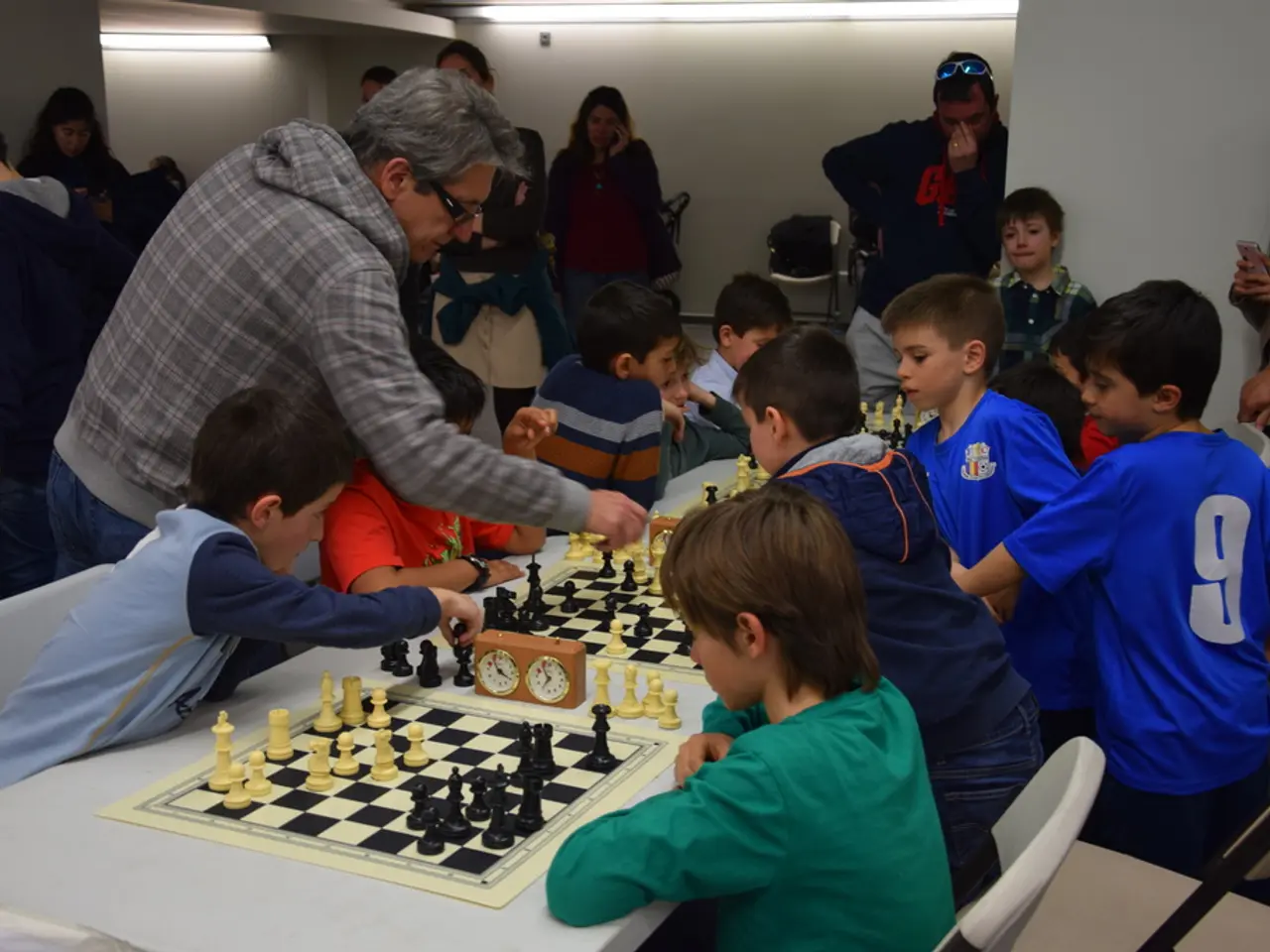
Decision-making in unfamiliar situations often relies on memory, according to a recent study conducted by economists Joerg Spenkuch, Yuval Salant, and David Almog from the Kellogg School. The research, which analyzed the game of chess, specifically the variant Chess960, sheds light on the role of memory in decision-making and the phenomenon known as the "memory premium."
In Chess960, the starting positions of pieces in the back row are scrambled, making each game unique and challenging. The study found that players tend to rely on moves they have used before in traditional chess, a phenomenon the researchers refer to as the "memory premium." This tendency can be particularly strong when the placement of pieces on a Chess960 board more closely resembles the arrangement in standard chess.
The memory premium is evident in the opening moves of the game. The study, which analyzed the opening moves of nearly 150,000 first-time Chess960 players with a history of playing traditional chess, found that people who played Chess960 for the first time used opening moves from their memory roughly twice as often as moves that they had not played before. However, as people play more games of Chess960, they become less reliant on their pool of moves from standard chess to make their first move. After about 25 games, the memory premium decreases by nearly 50 percent.
The study was conducted in collaboration with the popular internet chess server Lichess. Recognizing that different situations may require different choices, the researchers used a controlled environment but also real-world data, making it a "sweet spot" between a lab experiment and decision-making in the wild.
The findings underscore the fundamental role of memory in how we make choices. However, the study's findings suggest that relying on memory generally interferes with the desire to make the best possible decision in unfamiliar situations. This was demonstrated by the strategy of relying on past successes without adapting to new situations, as seen in Uber's expansion into Germany.
The researchers emphasize that while memory can be a valuable tool, it should not be the only factor guiding our decisions, especially in unfamiliar situations. As we navigate the complexities of the modern world, striking a balance between relying on our past experiences and being open to new possibilities is key to making informed and effective decisions.
In the realm of intellectual pursuits, considering the study on Chess960 and its findings, there appears to be a correlation between past knowledge and decision-making in uncharted territories, a phenomenon dubbed as the "memory premium." Additionally, the study highlights that over-reliance on memory in new and unfamiliar contexts, such as during Uber's expansion into Germany, may hinder optimum decision-making, underscoring the importance of mental flexibility and adaptability in health-and-wellness (mental health) and science.