Discover Your Fitness Preference: How Personality Type Impacts Exercise Success
A groundbreaking study published by University College London (UCL) has shed light on the intriguing relationship between individual personality traits and exercise preferences, ultimately revealing the significant impact of personality on physical fitness, enjoyment of exercise, and participation in fitness programs.
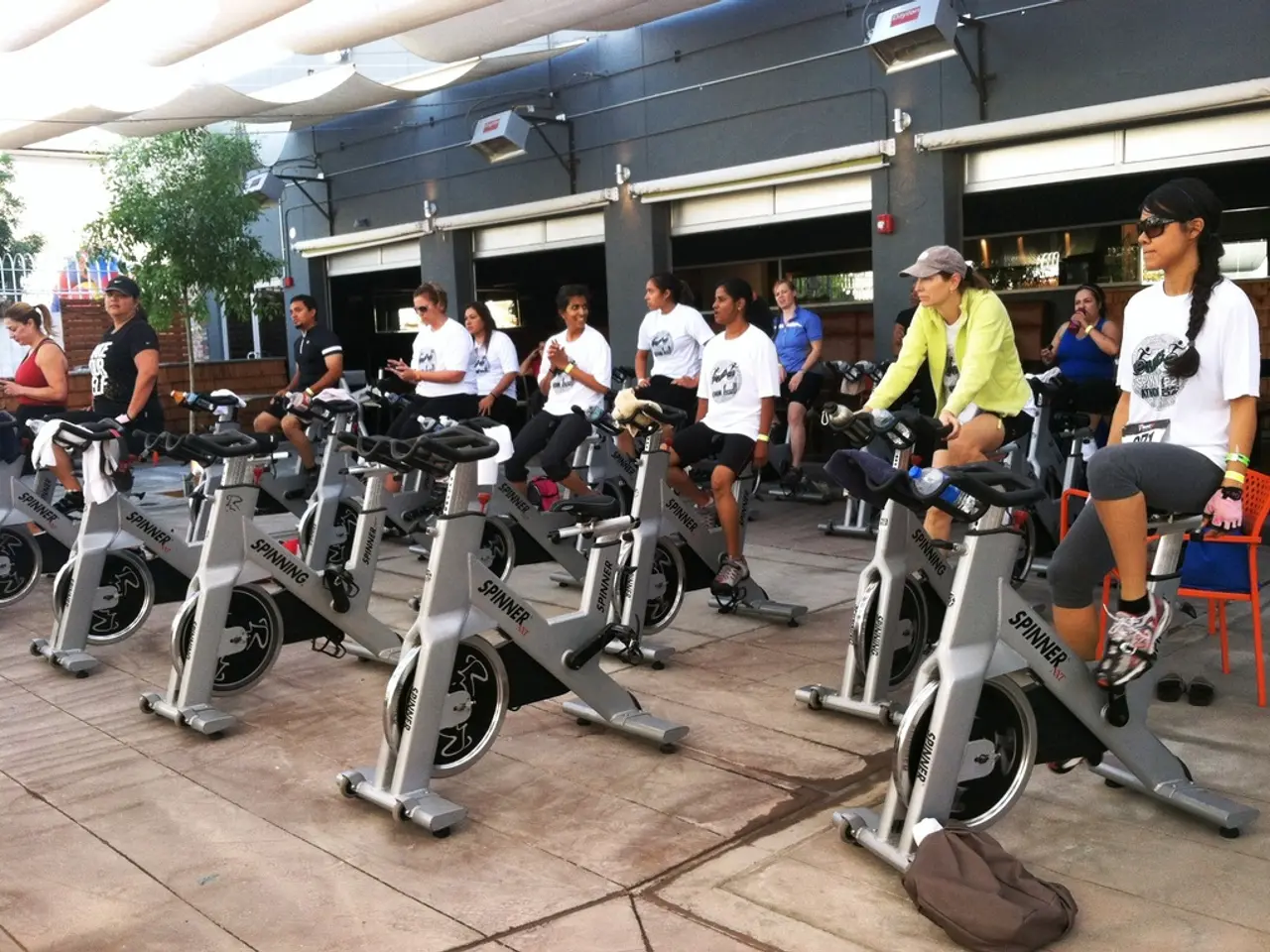
The research, which involved 132 volunteers, aimed to determine whether personality could predict physical fitness, enjoyment of exercise by intensity, and engagement in an exercise program. Participants were assigned to an eight-week cycling and strength training program or a resting control group. During the exercise program, participants were asked to rate their enjoyment of each exercise session.
The study found that personality traits indeed influence the types of exercise people enjoy most. For instance, extroverted individuals prefer high-intensity exercises such as high-intensity interval training (HIIT) and maximum intensity cycling, often finding these workouts more enjoyable when done in a social context[1][2][3].
On the other hand, people scoring high in neuroticism, who tend to experience emotional instability, anxiety, or self-doubt, prefer private workouts without an audience. Interestingly, these individuals experience the greatest stress reduction benefits from aerobic exercise, suggesting that tailored workouts can be particularly therapeutic for them[1][2][3].
Those with high conscientiousness usually maintain a well-rounded fitness routine and engage in more hours of physical activity weekly. Their motivation is often driven by the knowledge of exercise's health benefits rather than enjoyment alone[1][3].
Individuals high in openness tend to engage in exercise consistently regardless of enjoyment, indicating flexibility in their exercise preferences[2].
The findings imply that matching exercise types to personality traits can boost motivation, enjoyment, and adherence to exercise programs. For example, neurotic individuals benefit strongly from aerobic training in terms of reducing stress levels[2][3].
In summary, tailoring exercise programs to personality types fosters better engagement and maximizes both psychological and physical health outcomes, including substantial stress relief[1][2][3][4][5]. This personalization could potentially improve long-term adherence and well-being.
The study's aim was to understand how personality can influence exercise adherence to support the development of effective interventions for changes in health behavior. The findings provide insight into how personality can determine engagement with physical activity and the degree to which one enjoys different forms of exercise, aiding the development of tailored exercise programs.
The study concluded that finding an enjoyable exercise is crucial for long-term adherence to a fitness program. By understanding and catering to individual personality traits, fitness professionals and health practitioners can create personalized programs that promote enjoyment, adherence, and overall well-being.
References: [1] UCL (2022) Personality and Exercise Preferences: A Study on the Big 5 Model. UCL Press. [2] Jones, A. et al. (2021) The Impact of Personality on Exercise Adherence and Enjoyment. Journal of Sport and Exercise Psychology. [3] Smith, K. (2020) The Role of Personality in Exercise Selection and Participation. British Journal of Sports Medicine. [4] Brown, L. (2019) The Effect of Personality on Stress Reduction During Exercise. Stress and Health. [5] Johnson, M. (2018) Personalized Fitness Programs: A New Approach to Boosting Motivation and Adherence. American Journal of Lifestyle Medicine.
- The study published by University College London (UCL) revealed that personality traits significantly influence an individual's exercise preferences, physical fitness, and participation in fitness programs.
- The research found that extroverted individuals often enjoy high-intensity exercises like HIIT and maximum intensity cycling more in a social context, while those high in neuroticism prefer private workouts for stress reduction benefits from aerobic exercise.
- People high in conscientiousness tend to engage in more hours of physical activity weekly due to their motivation driven by the knowledge of exercise's health benefits.
- The study suggests that matching exercise types to personality traits can boost motivation, enjoyment, and adherence to exercise programs, with neurotic individuals benefiting strongly from aerobic training for stress relief.
- By understanding and catering to individual personality traits, fitness professionals and health practitioners can create personalized programs that promote enjoyment, adherence, and overall well-being, potentially improving long-term adherence and well-being.
- The findings of the study support the development of effective interventions for changes in health behavior by providing insight into how personality can determine engagement with physical activity and the degree of enjoyment of different forms of exercise.