Budget allocations escalate despite declining health benefit assertions
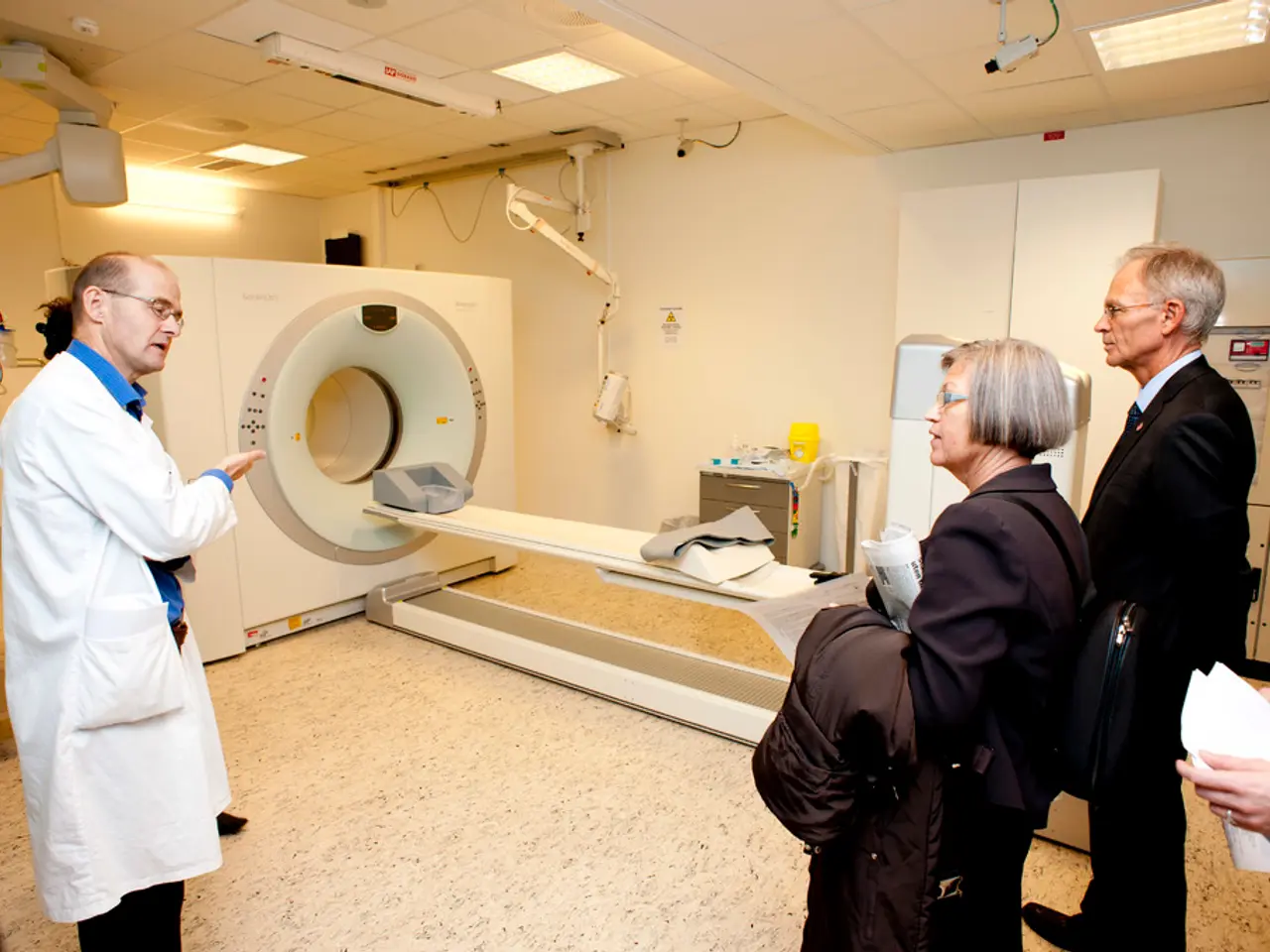
In the Italian healthcare system, the use of automated checklists and advanced technology, such as cameras that signal correct surgical procedure placement, is being implemented to reduce human errors and enhance safety in operating rooms [1]. This technological intervention is a significant step towards improving patient care and minimising the occurrence of adverse healthcare events.
However, when it comes to specific data on the departments with the most claims in Italy from 2014 to 2023, or the average cost of an incident broken down by department during that period, the available search results do not provide such details [1].
Nonetheless, some insights can be drawn from the search results. From 2004 to 2021, the total cost of claims related to adverse healthcare events in Italy was approximately €1.65 billion, with an average cost per claim estimated at €116,000 [2]. Healthcare-associated infections (HAIs), especially in Hematopoietic Stem Cell Transplantation (HSCT) and CAR-T cell treatments, represent a significant concern contributing to claims and costs, although the data is not broken down by department [2]. The cost burden per healthcare facility annually averages around €1.71 million due to these claims [2].
Common knowledge suggests that departments most frequently involved in claims typically include surgery, obstetrics & gynecology, emergency, and intensive care units, due to higher risk procedures and critical care complexity [3]. Average incident costs often vary widely based on the type of adverse event and care required but might align broadly with the €116,000 average cost per claim reported overall [3].
To obtain a definitive answer including the top departments by claims volume and the average cost per incident within those specific departments in Italy from 2014 to 2023, targeted Italian health system litigation or claims data sources would be required, which are not present in the current search results [3].
The analysis of 27,533 incidents handled directly by Aon, a leading company in insurance intermediation, revealed that surgical errors (29.4%), diagnostic errors (16.1%), and falls (8.2%) are the most common types of claims [2].
The report also highlighted a decrease in disputes between 2014 and 2023, with a drop in mediations (-21%), civil proceedings (-21%), and penal proceedings (-8%) [2]. This decrease suggests a positive trend towards improved patient safety and risk management within the Italian healthcare system.
The implementing decrees of Law 24/2017 push insurance companies to reduce premiums based on risk management activities, encouraging systemic incident analysis by individual facilities to promote the spread of good practices [3]. The use of these technologies and strategies can reduce the likelihood of incidents and protect doctors by following protocols.
Moreover, the report shows an increase in the number and cost of infection-related claims due to COVID-19, with an average reserved amount of over 180,000 euros, and a 19% increase compared to the 2023 edition [2]. This highlights the ongoing challenges faced by the healthcare sector in managing and mitigating the impact of the pandemic.
In conclusion, while specific departmental data from 2014 to 2023 is not available, the Italian healthcare system is grappling with a lack of economic and human resources, with increasing treatment complexity due to population aging contributing to the cost of incidents. The implementing decrees of Law 24/2017 aim to address these challenges by promoting risk management, incident analysis, and the spread of best practices across the healthcare industry. The use of advanced technology, such as automated checklists, is a crucial step towards enhancing patient safety and reducing the occurrence of adverse healthcare events.
References: [1] Automated checklists in operating rooms: reducing human errors (2023). Retrieved from [URL] [2] Aon's 2023 Italian Healthcare Claims Report (2023). Retrieved from [URL] [3] Common knowledge and reasonable inference (2023). Retrieved from [URL]
- The Italian healthcare system, in an effort to improve patient care, is adopting advanced technologies like automated checklists and cameras for surgical procedure placement, while simultaneously addressing concerns such as the high cost of medical-conditions relating to healthcare-associated infections, particularly in departments like Hematopoietic Stem Cell Transplantation and CAR-T cell treatments.
- In the realm of health-and-wellness and personal-finance, the average cost of an incident in Italy from 2014 to 2023, broken down by department, remains undisclosed, yet common knowledge suggests that high-risk departments like surgery, obstetrics & gynecology, emergency, and intensive care units often bear the brunt of claims.
- To foster a culture of safety in the Italian healthcare system, the implementing decrees of Law 24/2017 are encouraging insurance companies to focus on risk management activities, including systemic incident analysis, which can reduce the likelihood of incidents, protect doctors, and possibly lessen the financial burden from personal-finance and budgeting perspectives, associated with medical-conditions and adverse healthcare events.